

Peel and Stick Paint Samples | Samplize Review

If you’re wondering if Samplize peel-and-stick paint color sheets are worth the hype, read on. Today I am giving my full review of Samplize paint sample sheets, including are the colors accurate, when to use them in the process, are they really mess-free and more!
This post contains affiliate links. If you purchase something through one of these links, I will receive a small commission at no additional cost to you.
As someone who has turned picking paint colors into a career, I have a lot to say about Samplize. That’s why I was thrilled when Samplize approached me and asked if I would write an unbiased review about their peel-and-stick paint samples. Full disclosure: I have been compensated for my time to write this blog post, however, I have never received free product from Samplize, and most importantly, all opinions expressed here are my own, not those of Samplize!
Let’s get into it! First, we’re going to talk about what the samples are like and how to use them. Then I’ll go over what I like and don’t like about them. If after reading, you think you want to try them, click here to start selecting your sample sheets.
What Are Samplize Paint Samples Like?
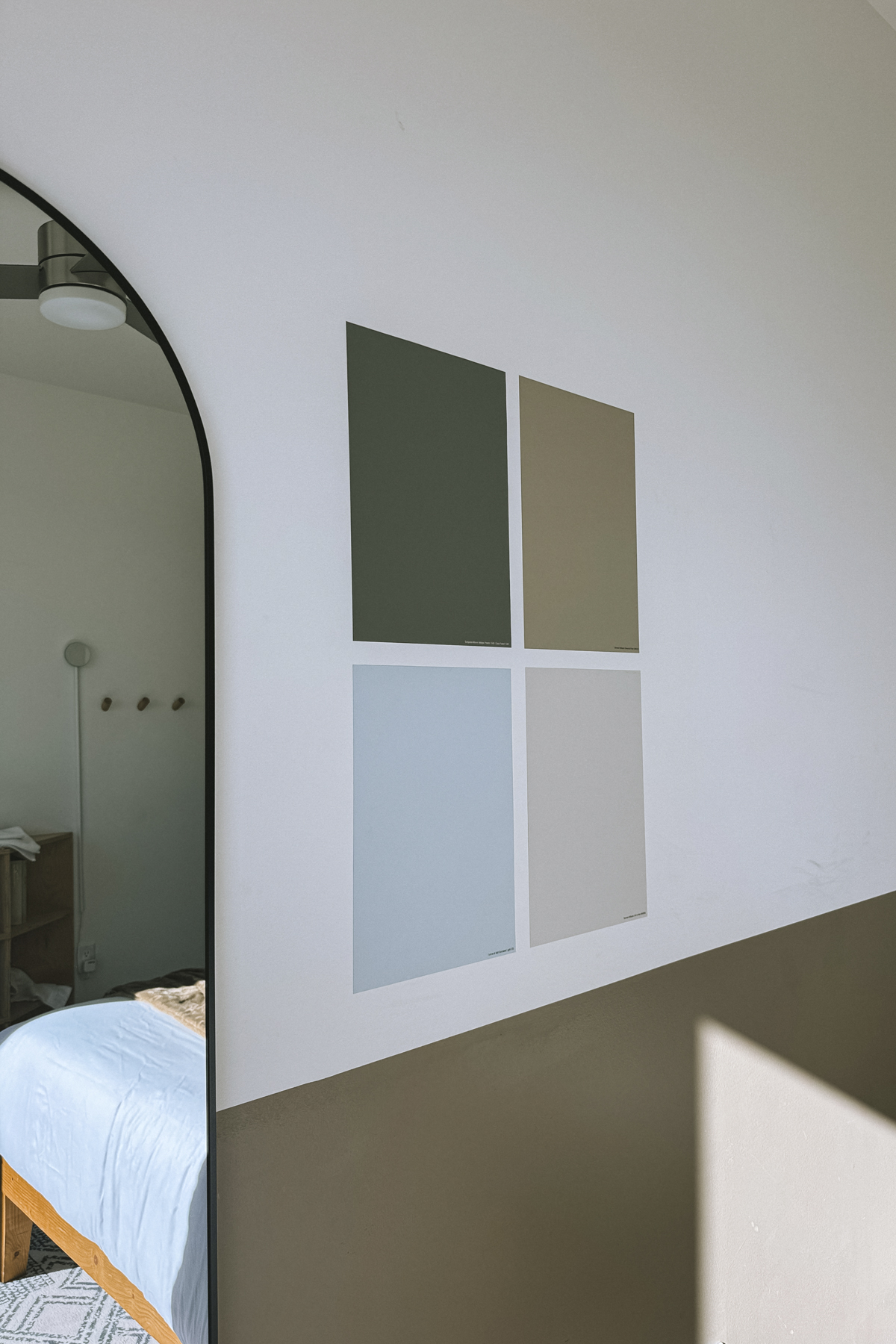
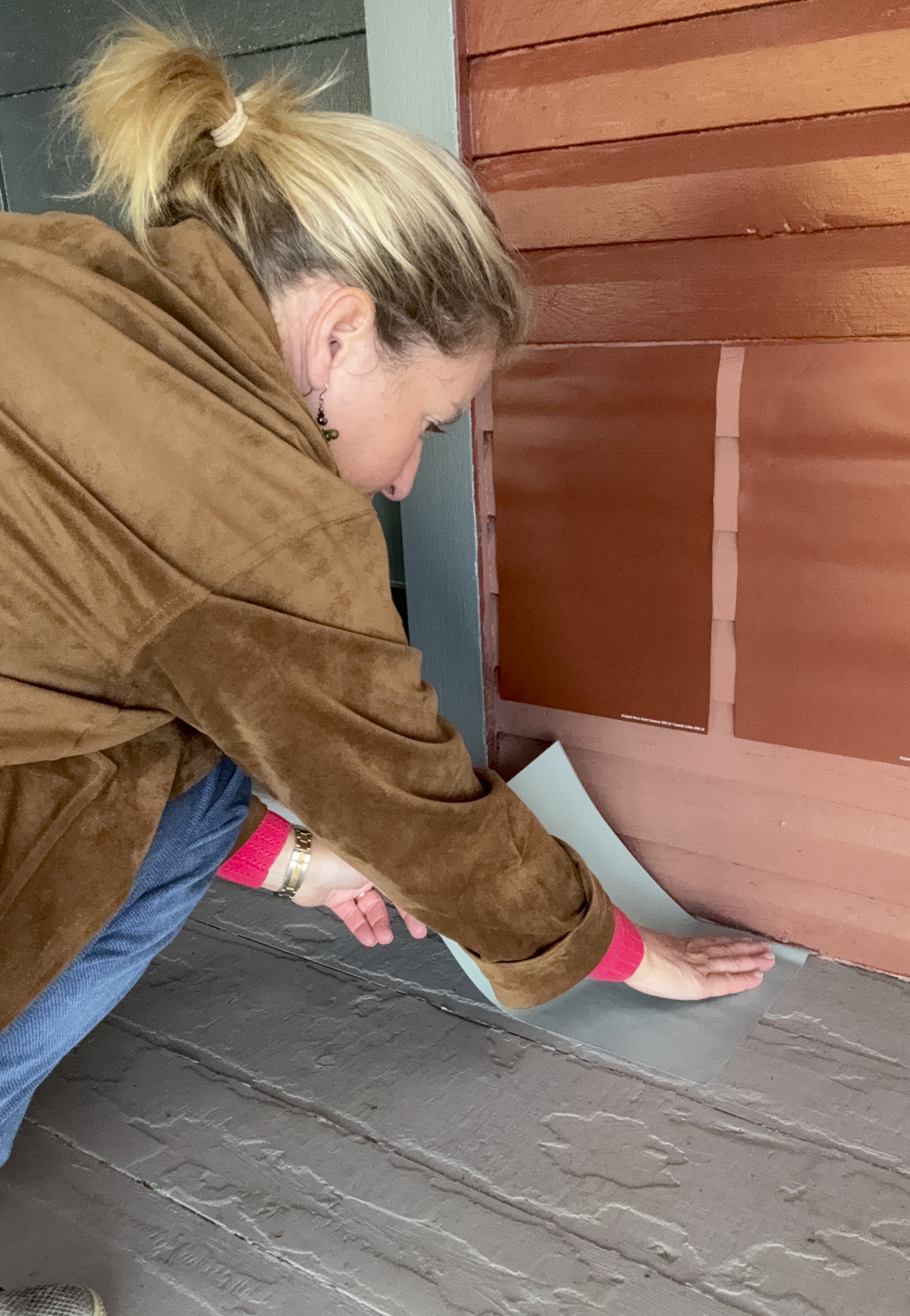
Samplize paint samples are large-format paint chips made on flexible adhesive material that can stick directly to surfaces. Think of them as large paint stickers for wall surfaces, trim and baseboards and anywhere you plan to paint!
- Real Paint: Samplize color sheets are made with two coats of 100% real paint from the manufacturers so they are color accurate (more about color accuracy below!)
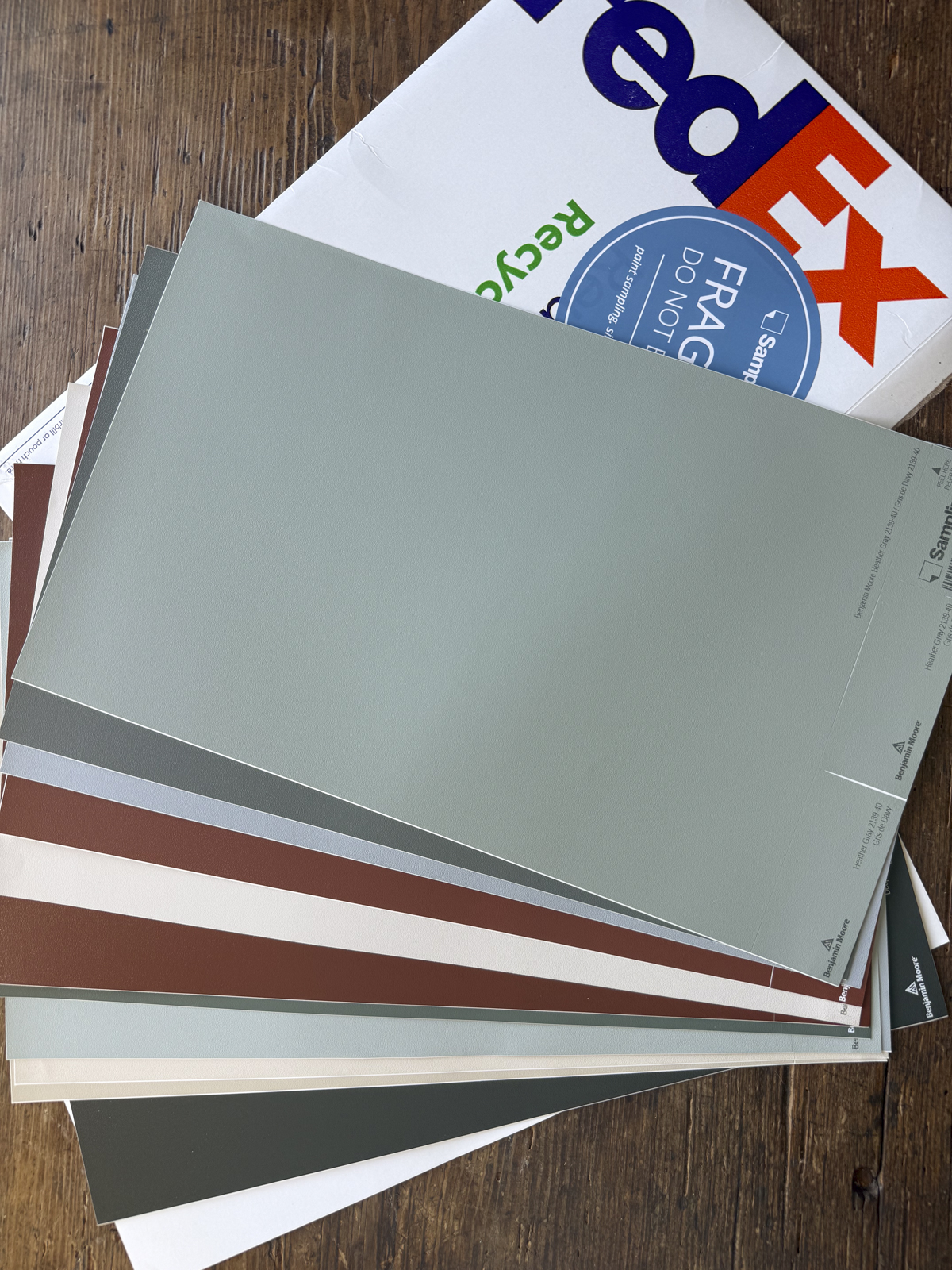
- Overnight Shipping: Once you order the samples on the Samplize website, the sheets arrive fast! Usually overnight via Fed Ex or another shipper in a flat envelope.
- Texture: The Samplize sample sheets are a vinyl-like material that’s soft, pliable and smells like a plastic kiddie pool. This pliability helps it adhere to curves and corners.
- Removable Backing: The paint swatches have a thin paper backing (like any sticker would) that can be peeled off easily. Hot tip: save the backing, I have had great luck resticking the backing to the sample once I am done with it. Then I can keep the sample handy for reference such as picking my other materials in the space.
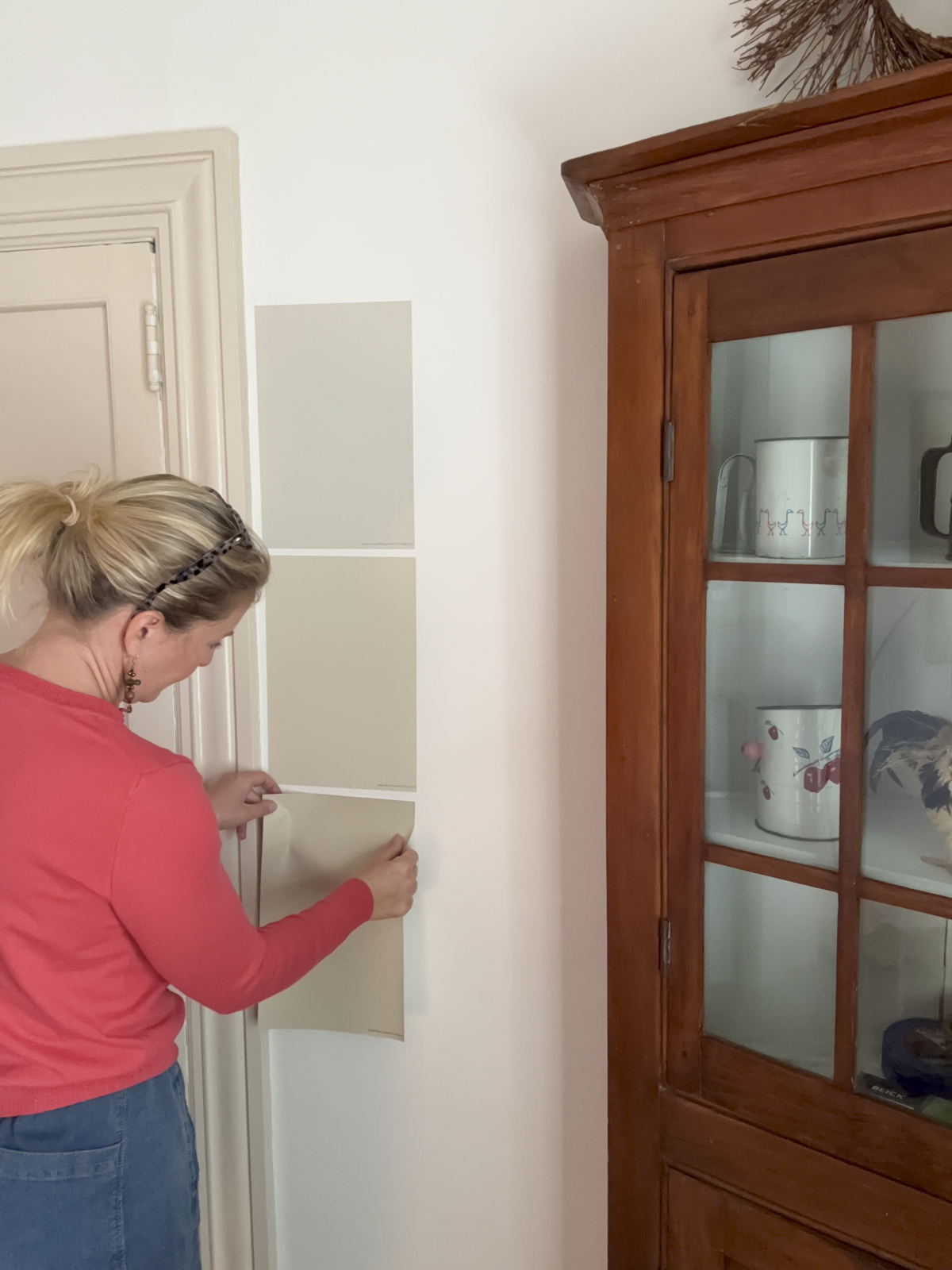
- They Re-stick: The patented adhesive technology Samplize uses allows you to take the stickers off the wall and re-stick them in a new spot. This allows you to see the way the color will react to the light in different areas of your room. It also will not damage your furniture or walls in doing so!
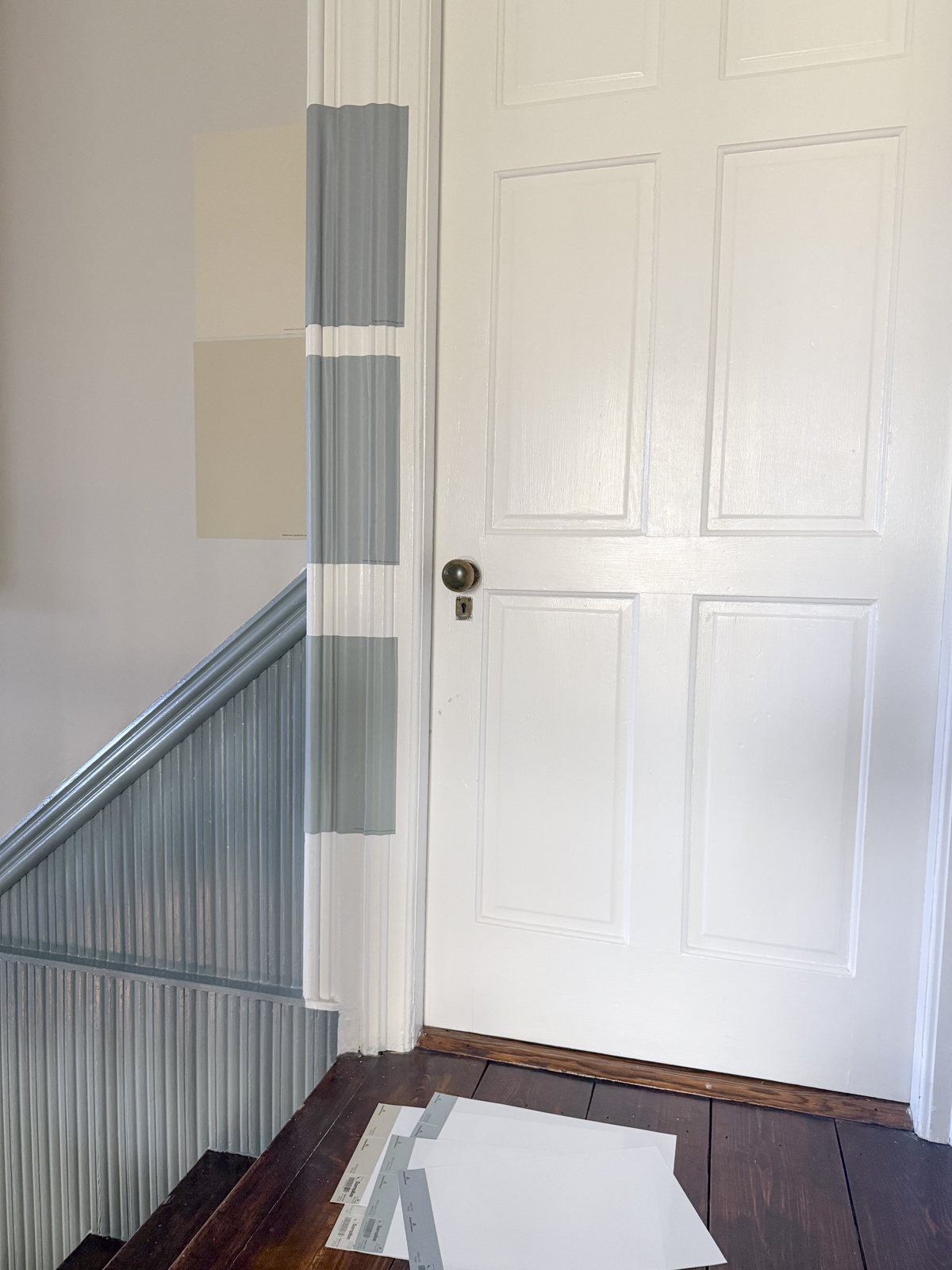
- They stick to woodwork too: The great thing about Samplize for visualizing trim color and millwork is they adhere to the shape of the woodwork so you can accurately imagine how the paint will look on the facets. They are fantastic for fireplace mantles and cabinetry.
- Damage Free: According to the brand, they won’t mark your wall or furniture. There are instructions to clean the surface first, and don’t leave on for a long time. I left my samples overnight in one area and they did take off a tiny bit of the old paint. So I suggest taking them off after you look at them.
What colors do they have and from which brands?
Paint stickers from Samplize are available in colors from Farrow & Ball, Sherwin-Williams and Benjamin Moore. They have almost 6,000 paint colors to choose from! I have yet to search for a paint color they do not have.
What are Samplize paint stickers good for?
Picking paint colors is not easy- and I want to be clear: Samplize is not a one-stop shop for making your paint choice. But they are GREAT for narrowing down your paint choices. Looking at large-scale samples on the wall is essential for saving money and 100% worth it! While it is not the ONLY step in picking a paint color, it is a necessary one if you want to save money, time and effort and ultimately love your paint color.
Steps for picking paint colors (The right way!)
Picking paint is a multi-step process and using large scale sample sheets is an important part of it! So, you’re probably wondering where does samplize fit into this multi-step process?
- Online Research: Do online research to get a general sense of what colors you want to test. And I am not just saying that because I write paint reviews here! When I start a project, I love reading about colors in depth (with photos). I also find the Benjamin Moore and Sherwin-Williams websites to be super helpful to discover alternative shades and tints. I regularly use Plan Home, which is a website where it is easy to compare colors digitally. In this first phase of picking a paint color, I like to make a digital mood board mock-up with photos and digital paint swatches using the unique hex code for each color. NOTE: A digital representation of a paint color is NOT a substitute for the complexity of the pigmentation of real paint, so this is only a starting point. When you are done with this step, you’ll probably have three or four colors in mind.
- Small Samples: Next, head to the paint store or get out your fan deck. The second part of the process is to look at small paint chips, which are available for free at the home center, paint store or hardware store. Make sure to look at them in your space in natural light!! I like to compare value, hue and saturation of a few different colors for each surface. At this point, I will make a list of several paint colors that I like. Funny enough, a lot of the time, my list of potential colors will jump from three to ten or more!
- Large Samples: Here’s when to buy large-scale samples. In my color consulting practice, I always use large samples for my clients. Some jobs will include 50 sample sheets, which I get from a source available to the trade only. For non-professionals, here’s where Samplize comes in! This is where you can really get a feel for the color. After this step, one or two clear winners will rise to the top.
- Brush Outs: Don’t believe folks who say you can pick paint mess-free. Having helped folks from far and wide choose paint colors, and made mistakes in my own home, take this from me. If you don’t want surprises and want to love your paint color, don’t skip this step! My point is, even with Samplize, you will have to test your samples with real paint on your actual wall (or trim or ceiling or whatever you are painting), but this is ultimately worth it. Sample sheets will get you to the top choice and the runner-up, but I’m telling you, brush-outs are so worth every penny!
Ready to try Samplize? Get Started Today!
What about color accuracy?
Another common question about Samplize is about color accuracy. If you have read the threads online or read other reviews, this can be confusing. Samplize swatches are made from real paint from the actual manufacturers, so how come you’ll find some reviews that say their samples are not consistent with real paint?
I have talked to clients about this and have used these swatches myself, so I totally know why this is a common misconception.
There are two reasons this comes up. One is the sheen and texture of Samplize sheets, and two is the slight variation of paint from batch to batch. Let’s take these one at a time.
Sheen and Texture of Samplize Samples
The pliable material Samplize is made out of has that great restick quality to it. But it also has a subtle pebbled texture and it is slightly reflective.
According to Samplize, the Benjamin Moore samples are painted with Eggshell sheen and the Sherwin-Williams are painted with satin. In other words, they have a bit of shine to them compared to a flat paint. Depending on the paint you plan to use, this may not be an accurate representation of the way your paint color will look. Flat paint will absorb light, and shiny paint will reflect it back.
Moreover, the pebbled texture I mentioned will create mini shadows and reflections depending on the lighting in your space. This can be confusing and trick the eye. Depending on the surface you are painting (like drywall which really absorbs the paint) the paint will look a little different. That’s one reason why Samplize doesn’t have perfect accuracy and will look slightly different than actual paint.
Paint Varies From Can To Can
Unless you are a large construction firm buying bulk quantities directly from Benjamin Moore of one of the massively popular colors (like White Dove, for example) most paints are almost always custom-tinted at the paint counter. You’ve seen this process, I am sure! The paint professional will take a can of base paint, set it under the computerized pigment machine, which add squirts of the various pigments, and then they tap on the lid, set it in the mixer and it’s shaken up. This process is very accurate, but it is not 100% perfect.
What’s more, the paint and pigment will start to settle after a short time, and within a week or so, it will be noticibly separated. Any time you paint, you’ll have to re-stir. Depending on how patient and thorough you are with that silly little wooden stick, you may miss a little pigment sitting on the bottom of the can. This can cause more inaccuracy.
Another factor is the base paint! Sherwin-Williams Emerald vs Pro Mar will have different properties and the color of the paint will look slightly different. This is the same for other paint brands too. I have talked to my rep about this and they say to test in the actual product you plan to use if you want complete accuracy.
And please don’t get me started on color matching from brand-to-brand. That’s another blog post altogether! My point is, you can’t skip that last step in picking the paint color- you HAVE to do brush outs to make sure the paint looks the way you expect!
Is Samplize Really Mess-Free?
Yes, these paint stickers are mess-free; however, I highly recommend you narrow your favorites by using Samplize first, then get “messy” and brush out actual paint samples of your top colors. As I said above, Samplize is part of the process of picking a paint color the right way, and ultimately you should test paint to make the final decision.
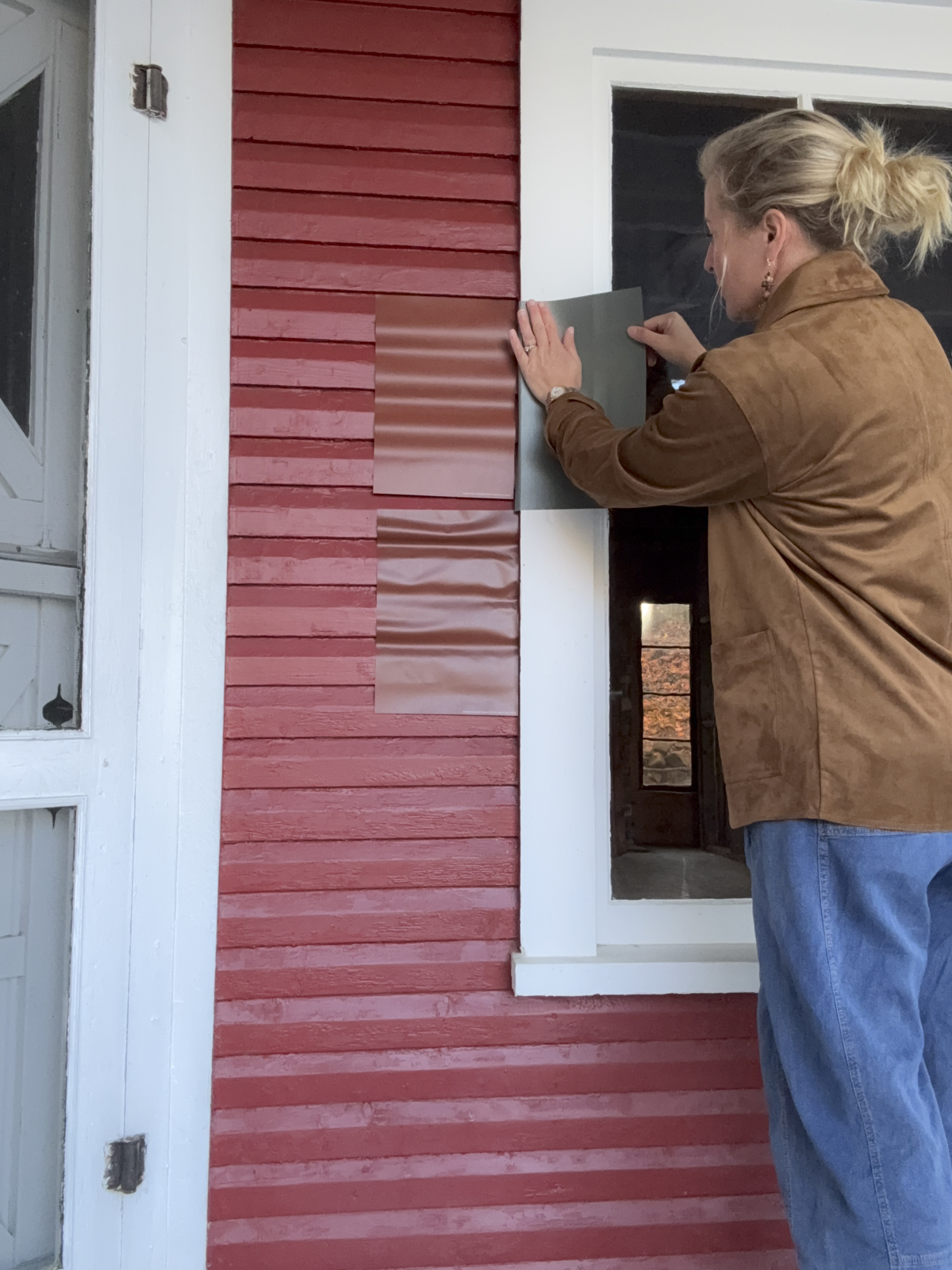
- Relation to Other Colors: Paint is relative to what is next to it. So if you are sticking the sample to a wall that has another color on it, the sample color will relate to the existing wall color. Ideally, you wouldn’t be able to see any of the old paint color in relation to the new one.
- Size: Samplize sheets are great for taking your list from 10 potential colors to 2 favorites. But when it comes to final decisions, Samplize paint sheets are too small because you can see the old paint behind it. That’s why brush-outs are so important. When I do brush-outs I cover as much area as I can so I can get a real sense of what the color will look like in the space. I try to find an area with an architectural detail (like the entire wall section between a window and corner) where I am able to see the sample color in isolation. Samplize swatches are far too small to do this. While a white card helps block out background colors, it forces you to evaluate the new paint against white rather than the room’s actual color palette.
- Sheen and reflectivity: I mentioned above, the sheen of the paint will change the way it looks. The samples from Samplize are great for getting into the ballpark, but when you are ready to make a final decision, you’ll want to double-check by buying a quart of the actual sheen (and product line) you will be doing the final project with.
Is It Worth The Price?
Samplize sample sheets are $6.95 for a standard sheet and $9.95 for the large 15 by 19-inch samples.
Are they worth it? Ultimately, my two cents on whether or not they are worth it comes down to convenience. I think they are worth it and that is why I recommend them to readers here at A Season For Home. I personally love the fact that I can order them right from my desk and they arrive the next day. Then I do not have to make a mess to narrow my selections from ten contenders to two finalists. The final step will be brushing out the samples in the space, but I would much rather only have to brush out a couple!
How does this compare to other options?
- Free Paint Chips: Small free paint chips at the hardware store are far too small to make an informed decision about which paint to brush out.
- Large Paper Samples: Some paint stores carry large paper sample sheets from Benjamin Moore that you can borrow and return. These are great and free! They are a bit smaller than Samplize swatches but they help with this intermediary step of narrowing down before brush-outs. They will have to be taped up to look at them and cannot conform to curves and woodwork. Conversely, Sherwin-Williams stores do not offer large free paper samples. They have peel-and-stick samples of a few colors that you have to buy and they are smaller than samplize.
- Home-made sample boards made with paint: I have seen some people buy the small tester pots of flat paint (about $5 or $6 each) and brush it on a sample board to make a home-made sample board. This is a good option if you are not ready to make a mess in your space and are trying to narrow it down. Each pot of paint will cost about the same as a Samplize sheet and you will also need to buy brushes, rollers and the sample boards. Note, these tester pots only come in flat interior paint.
- Working with a Color Consultant: Some color consultants (myself included) will offer free paper sample sheets as part of their service. I do this for both virtual consultations and locally when I do Vermont Paint Color Consultations. For the price, which is admittedly much higher than that of a dozen or so samples from Samplize, you are also getting my expertise, training and access to the trade-only tools that help to narrow down the best color for your home.
Why I recommend Samplize
Picking a paint color isn’t easy. [If it was, there wouldn’t be paint color consultants like me!] If you have ever gone to the hardware store, looked at the samples on the wall, picked a pretty shade and left the store a few minutes later with a bucket of paint, then you have probably learned the hard way that the process takes a bit of time, trial and error. My goal for you is to keep the error to a minimum and make only a small mess in the process! That’s why I whole-heartedly suggest making Samplize part of the process for your next paint project. After researching online, looking at the small chips (at home in your lighting) the next step is ordering samples from Samplize!
Ready to try Samplize? Get Started Today!
My Paint Scheme Collections On Samplize
2027 Color Palette of the Year